


Small apartment decorating ideas on a budget usually mean one of two things: a $12 candle passed off as a makeover, or a full renovation no renter can actually do. Neither changes how a room feels to live in. The apartments that read as expensive almost never got there through big furniture purchases — they got there through layered light, one strong focal point, and a handful of finishing touches most people skip because they seem too small to matter. This roundup collects 13 of those moves: swaps you can make in an afternoon, thrifted finds styled to look pricier than they were, and a few rental-safe tricks that undo the builder-grade defaults every apartment starts with. They pair well with a few frugal living habits that make any budget stretch further. Pick three to start, and the difference will be visible before the fourth.
Jump to Any Idea
- Layered Table Lamps Instead of One Overhead Light
- Curtains Hung Close to the Ceiling
- A Gallery Wall Built from Thrifted Frames
- Brass Cabinet Hardware Swapped in an Afternoon
- An Oversized Mirror Leaning Against a Bare Wall
- Faux Marble Contact Paper on a Tired Countertop
- Floating Walnut Shelves Above a Reading Nook
- A Jute Rug Layered Over Rental Carpet
- Slipcovers That Refresh a Worn Thrifted Sofa
- Trailing Pothos on a Repurposed Bookshelf
- Removable Wallpaper on a Single Accent Wall
- Velvet Throw Pillows in One Rich Color
- A Curtain Divider Hung with Command Hooks
Layered Table Lamps Instead of One Overhead Light
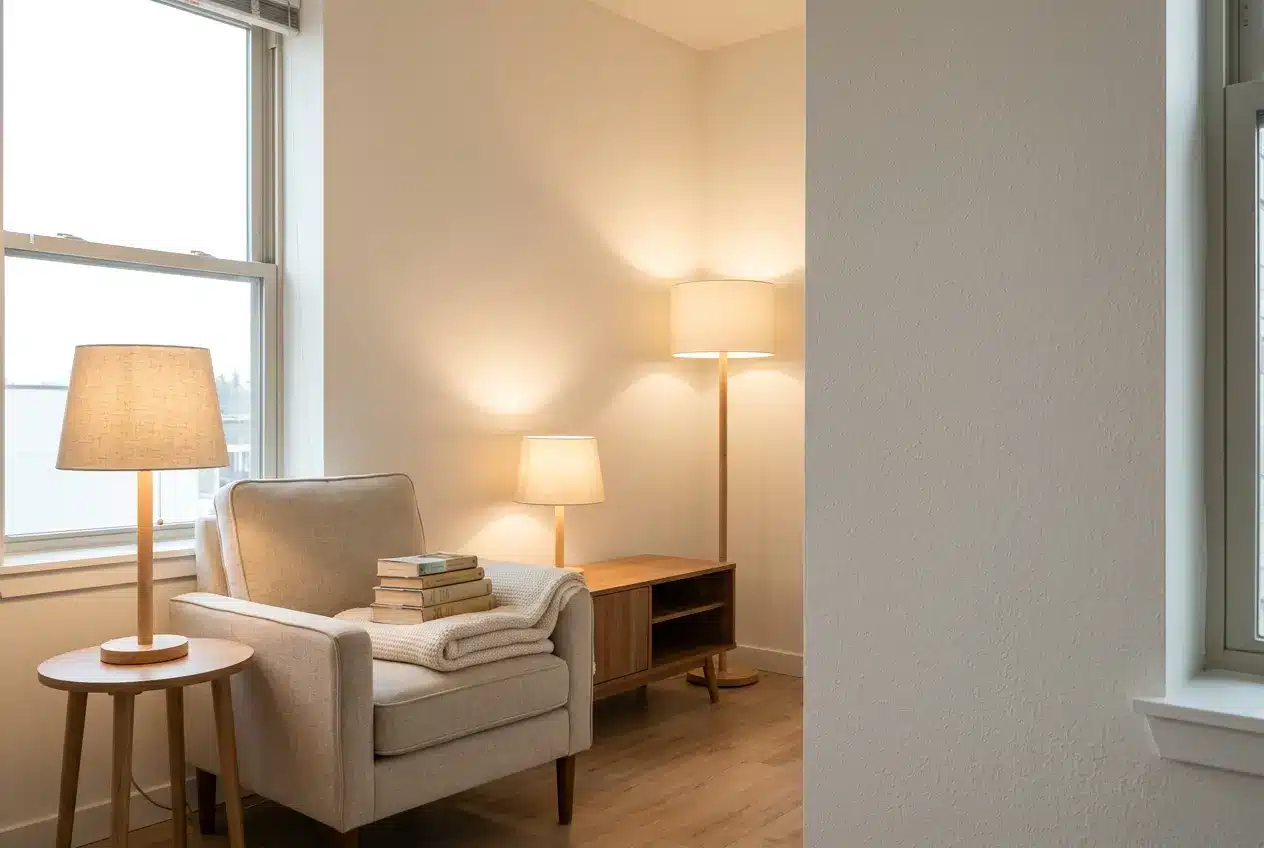
One ceiling fixture does to a small apartment what a flashlight does to a face — it flattens everything and throws hard shadows into every corner. Swapping that single source for three lamps set at different heights is the fastest, cheapest change on this list, and it’s the one interior stylists actually use on shoots: they call it building “pools of light” instead of one flat wash. Stick to warm 2700K bulbs so the room reads golden instead of clinical, and plug everything into one power strip with a switch so you’re not chasing three separate lamps at bedtime.
- A reading-height lamp beside the chair or headboard
- A waist-height lamp on a console or side table
- A low floor lamp tucked into an empty corner
Curtains Hung Close to the Ceiling
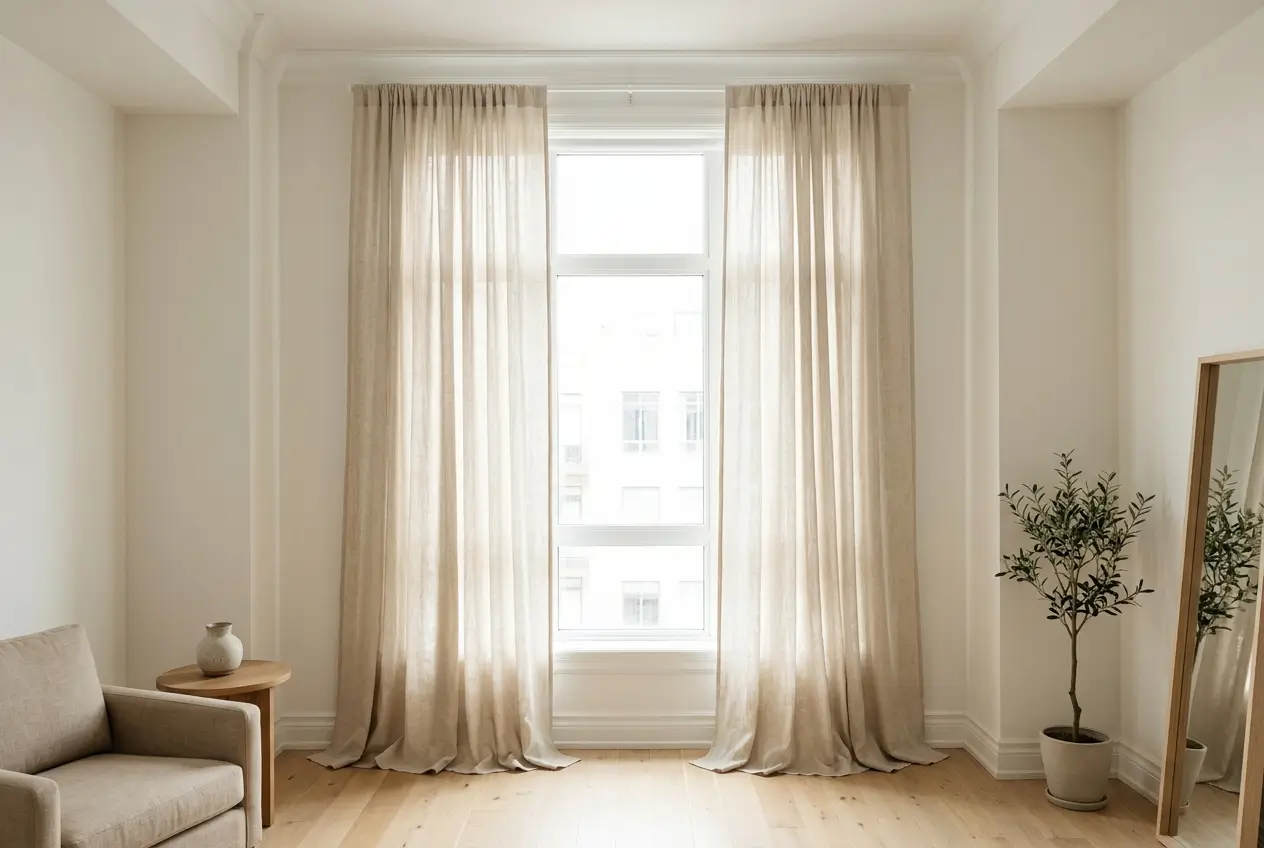
Most apartment curtains hang exactly where the builder put the rod: a few inches above the window frame, which is also exactly where a room stops looking tall. Move the rod up near the ceiling instead, and let the panels run all the way to the floor. The extra few feet of fabric between window and ceiling reads as height, not extra spending. Extend the rod four to eight inches past the window frame on each side too — it widens the window’s apparent size and lets more light spill in when the panels are open.
For a rental, a tension rod or a no-drill DIY project gets the same lift without a landlord conversation.
A Gallery Wall Built from Thrifted Frames
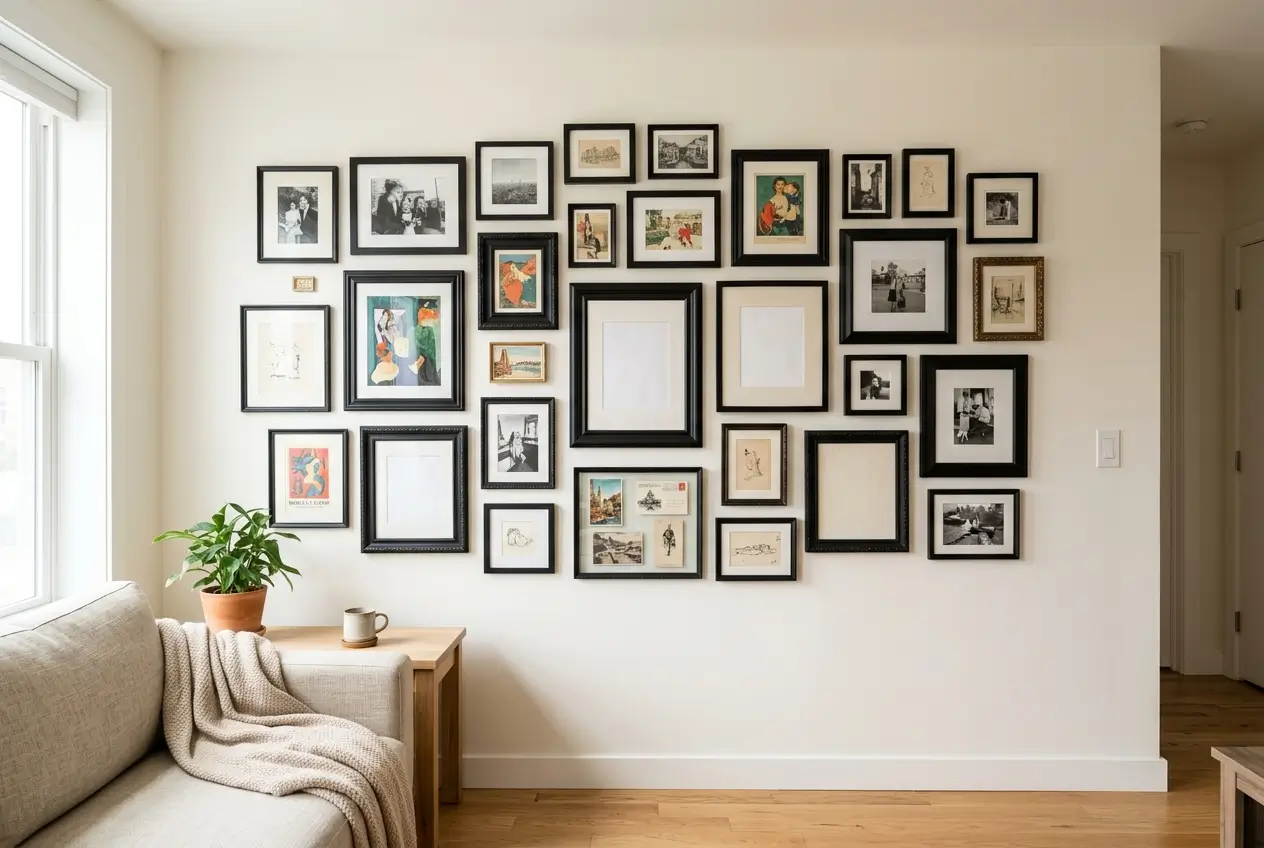
Thrift store frames rarely match, and that’s fine — a coat of the same spray paint across all of them (matte black or brushed brass both read expensive) turns a pile of mismatched hand-me-downs into a set. Trace each frame onto kraft paper, cut it out, and tape the paper shapes to the wall to test the layout before a single nail goes in; it’s how professional installers avoid a wall full of extra holes. Mix in one or two real prints or postcards among empty mattes — the negative space reads intentional rather than like you ran out of art.
Brass Cabinet Hardware Swapped in an Afternoon
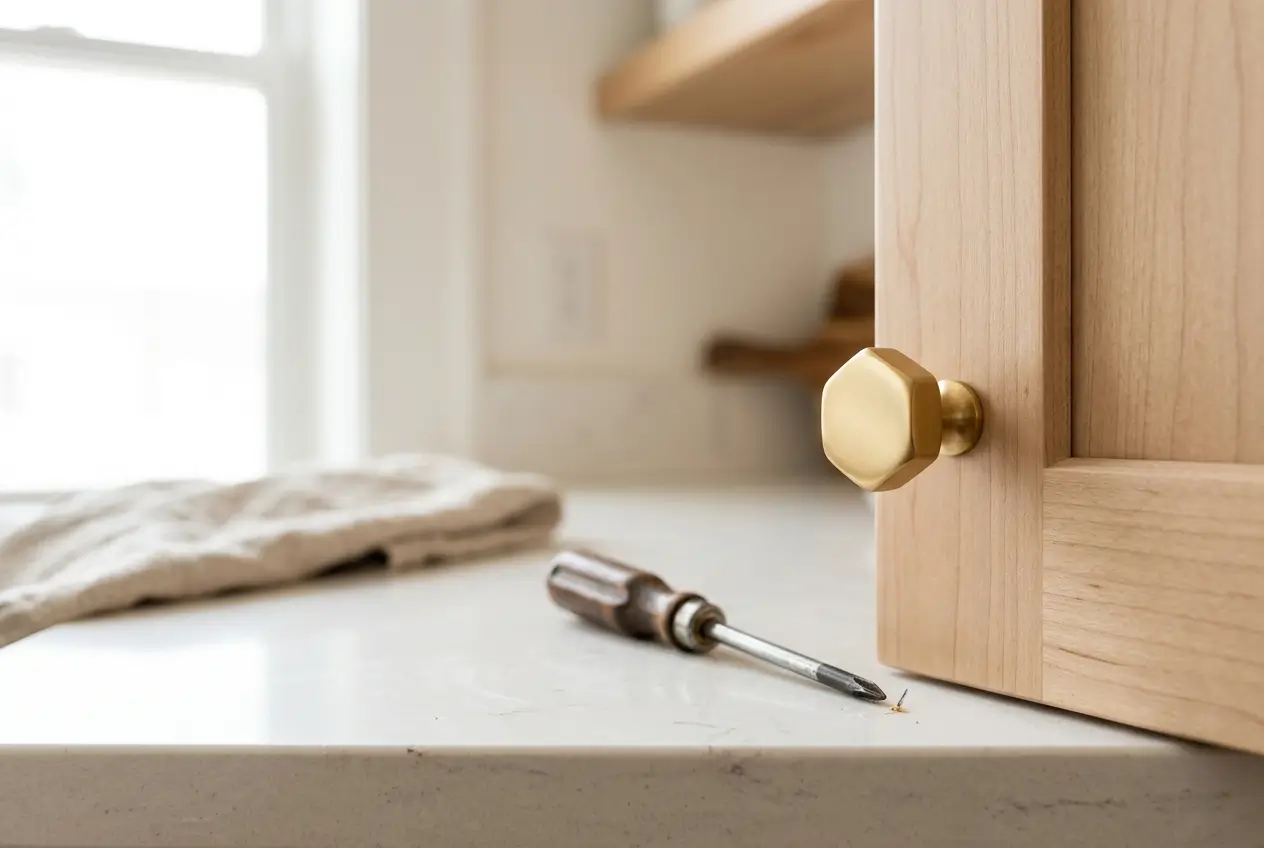
Builder-grade cabinet knobs are the fastest tell that a kitchen or bathroom was decorated by whoever built the building, not the person living in it. New pulls in warm brass or matte black change that read in under two hours, and most cabinet doors use a standard hole spacing, so replacements usually drop straight in without new drilling.
- A screwdriver and the new knobs or pulls
- Painter’s tape to mark spacing before you commit
- A labeled bag for the old hardware, so renters can swap back at move-out
An Oversized Mirror Leaning Against a Bare Wall
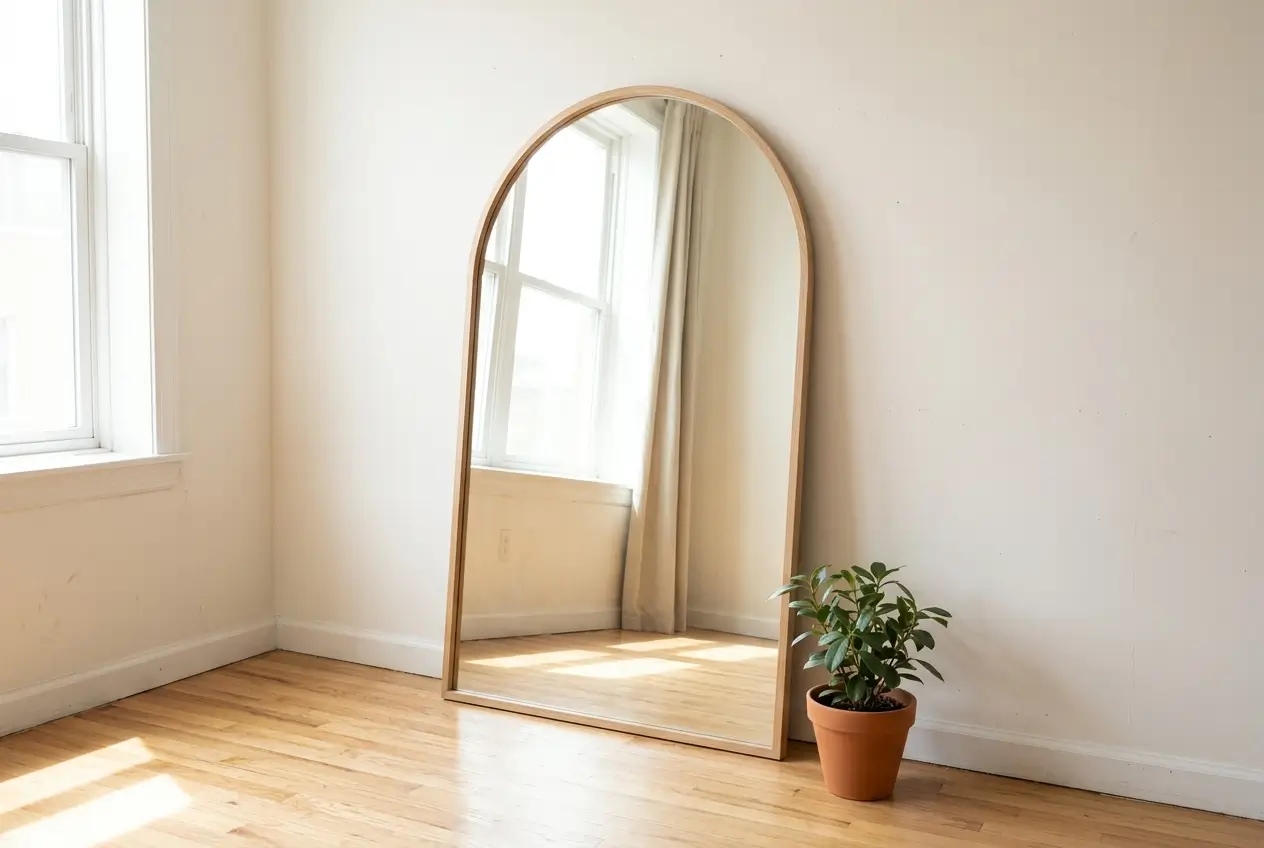
A large mirror does more for a cramped room than almost anything else on this list, and it doesn’t need to go on the wall to work. Leaning it — propped at a slight angle rather than flush against the plaster — catches more ambient light than a hung mirror does, and it reads as a styling choice instead of an afterthought. Facing it toward the apartment’s main window doubles the natural light in the room by early afternoon. Secondhand marketplaces and estate sales are the cheapest source for a mirror this size; delivery usually costs more than the mirror itself, so check that it fits in your car first.
Faux Marble Contact Paper on a Tired Countertop
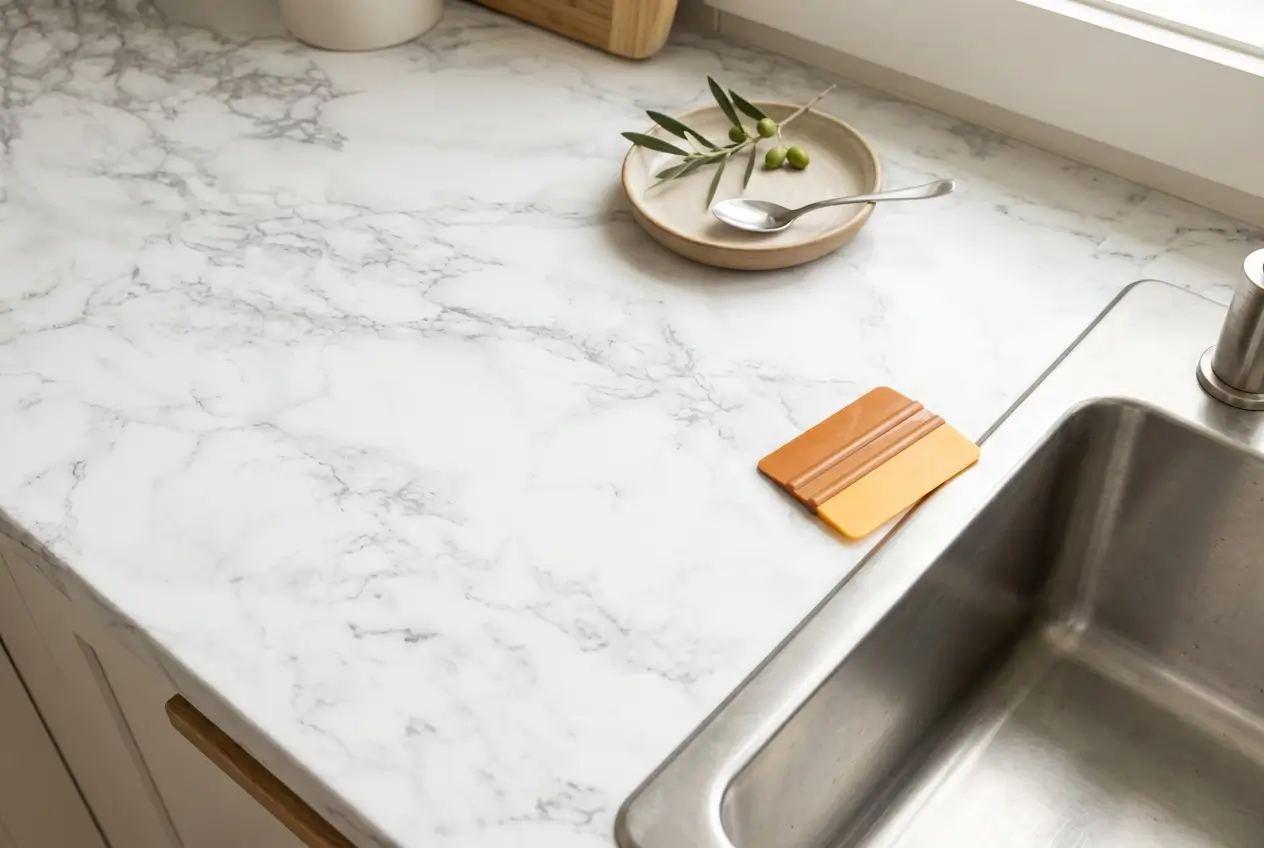
Contact paper has a reputation for looking like contact paper, but the current generation of marble-print vinyl — applied with a squeegee, not just smoothed by hand — is convincing enough that most guests don’t clock it until they touch the edge. It’s fully removable, so it clears the rental-safe bar, and a well-applied sheet holds up for a year or two of normal kitchen use before it needs replacing.
Tip: Run a strip of clear packing tape along the edge nearest the sink. That’s where water gets under the seam first and lifts the whole corner.
Floating Walnut Shelves Above a Reading Nook
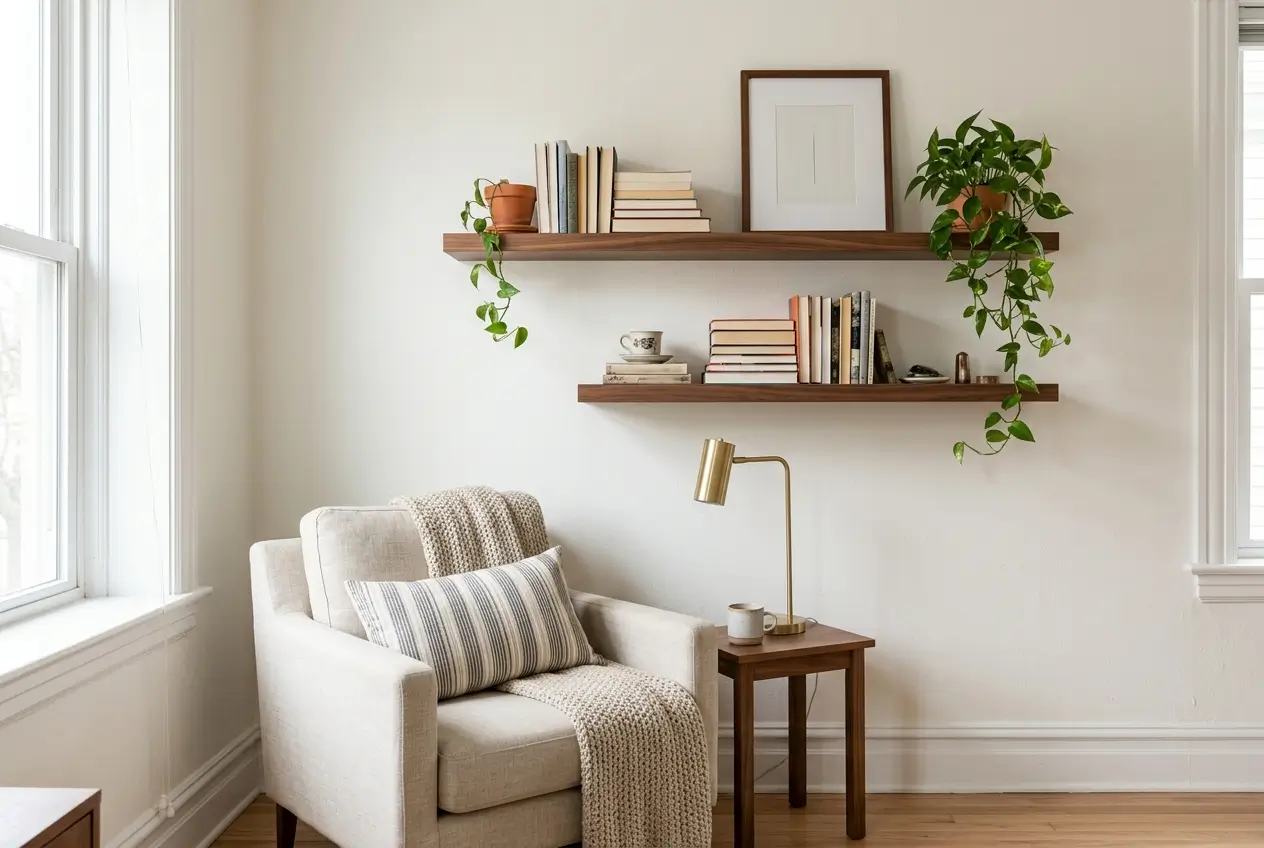
A bulky bookcase eats floor space a small apartment can’t spare, and a reading nook rarely needs one — two or three floating shelves staggered at different heights hold just as much and leave the corner open underneath for a chair. Stylists lean on a rough 60/40 ratio when filling them: roughly sixty percent books, forty percent objects like a small plant or a stack of trays, so the shelf reads curated instead of like storage. Hidden-bracket kits mount with no visible hardware, which is most of what makes them look built-in rather than added on.
A Jute Rug Layered Over Rental Carpet
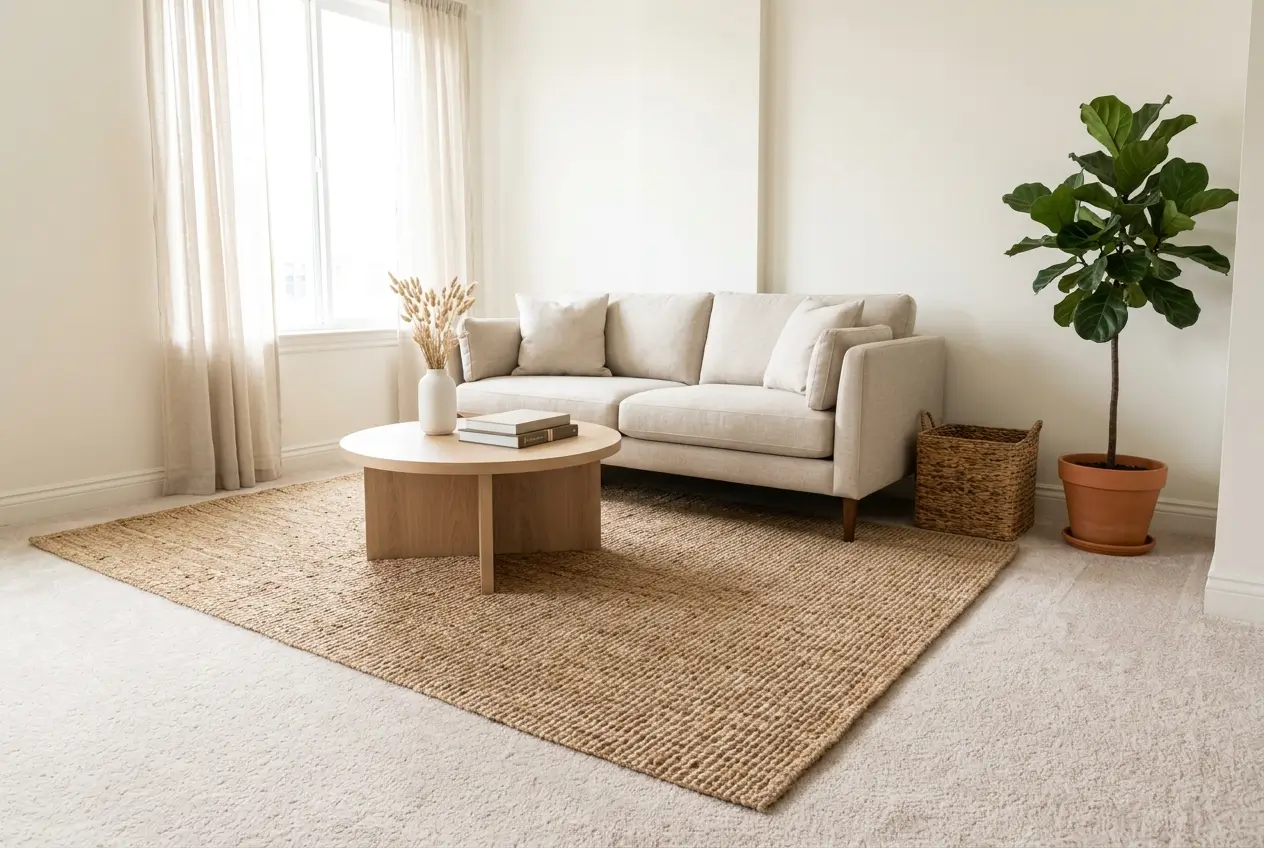
Wall-to-wall beige carpet is the single hardest apartment default to disguise, and pulling it up usually isn’t allowed anyway. Laying a natural-fiber rug — jute or sisal — directly on top breaks up the monotony and defines a seating area without touching what’s underneath. A thin non-slip pad between the two layers keeps the top rug from sliding and stops it from matting the carpet fibers below over time.
- At minimum, get the front legs of the sofa on the rug
- Leave a visible carpet border of a few inches around the edges
- Size up if in doubt — a too-small rug reads more “budget” than the price tag ever will
Slipcovers That Refresh a Worn Thrifted Sofa
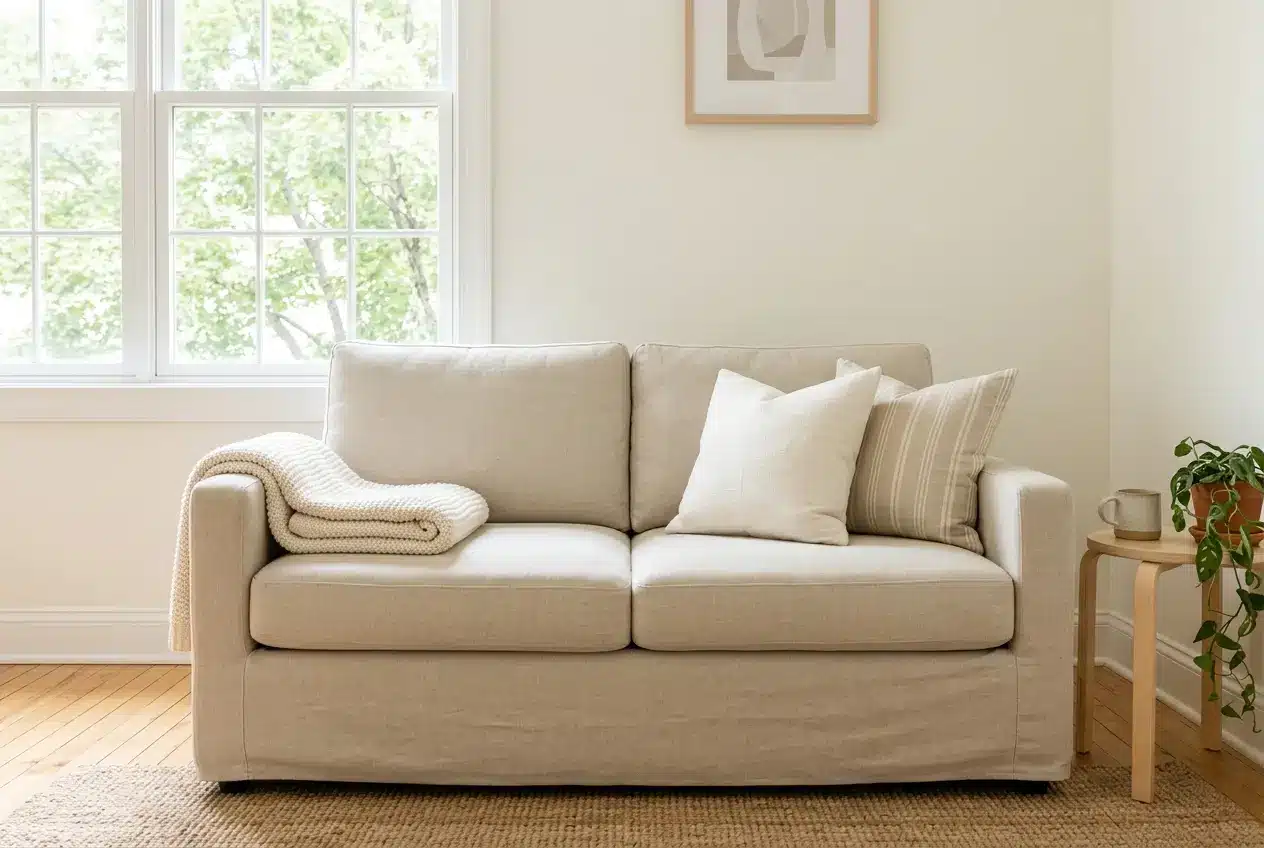
A secondhand sofa with a solid frame and intact cushions is worth buying even when the fabric looks rough — that’s the part a slipcover fixes. A fitted slipcover cut for the sofa’s actual shape looks tailored; a generic throw-style cover looks exactly like what it is. One trick that keeps it from looking baggy: wash and dry the slipcover on hot before the first fitting. The slight shrink pulls it snugger to the frame than it comes out of the package. It’s the same logic behind cutting costs without cutting comfort — spend on the piece that lasts, skip the piece that doesn’t.
Trailing Pothos on a Repurposed Bookshelf
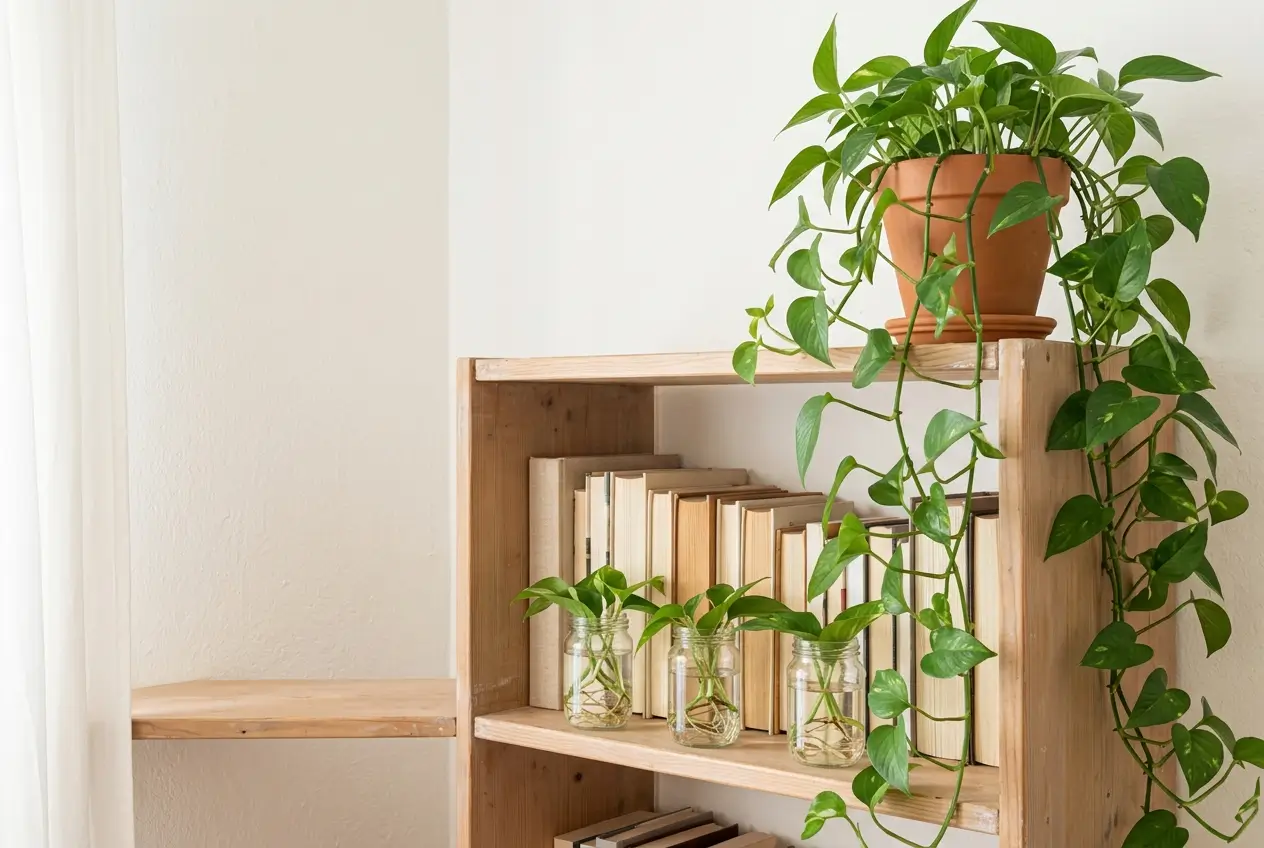
Hard shelf edges and square furniture lines are what make a small apartment feel boxy, and a trailing plant is the cheapest fix for that — nothing softens a straight shelf edge like a vine spilling over it. Pothos tolerates the low, indirect light most apartments actually get, and a single plant is enough to propagate several more: a few cuttings in a glass of water will root within a couple of months, at which point one plant has quietly become four or five. Leave the rooting jars right on the shelf in the meantime — they look intentional, not like a work in progress.
Removable Wallpaper on a Single Accent Wall
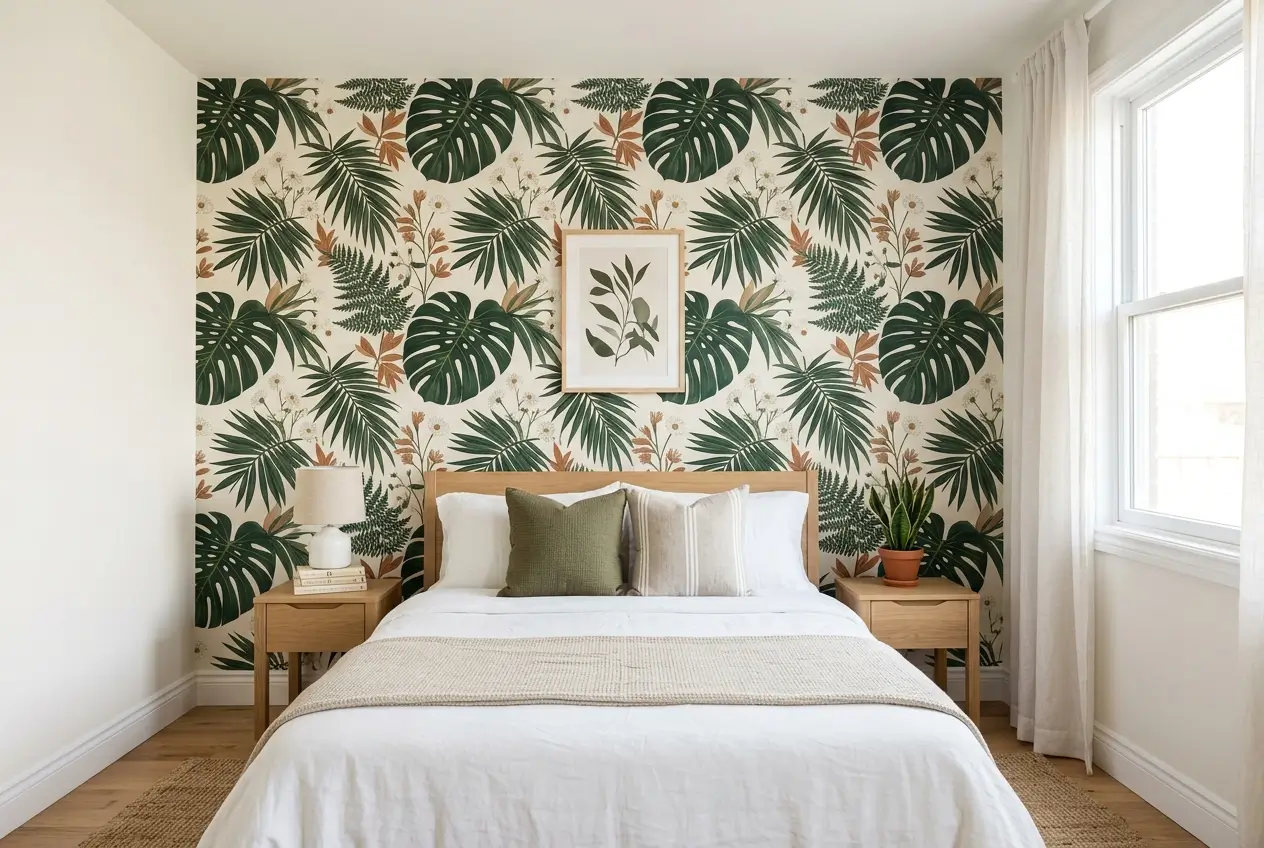
Wallpapering an entire small room usually backfires — it closes the space in. One accent wall does the opposite: it gives the eye a single place to land, which reads as a deliberate focal point rather than a small room trying too hard. Peel-and-stick versions keep both the cost and the removal headache low, and a single wall is realistically a one-afternoon job even for a first attempt.
- A level to mark the first strip’s edge
- A smoothing tool or squeegee for bubbles
- A sharp blade for trimming at the ceiling and baseboard
Velvet Throw Pillows in One Rich Color
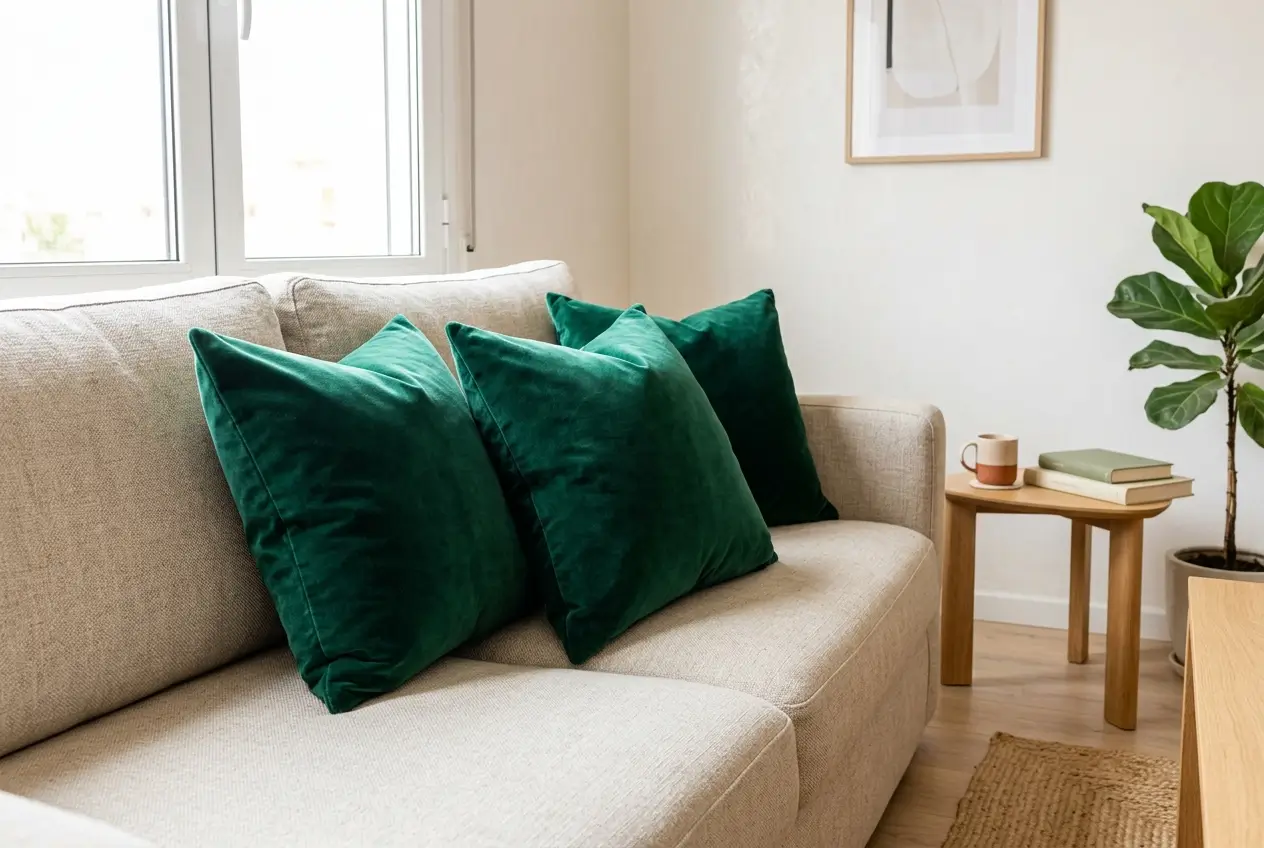
A pile of mismatched patterned pillows from a clearance bin reads busy in a room that doesn’t have square footage to spare. Two or three velvet pillows in one saturated color — deep green, rust, ink blue — reads considered instead, and velvet in particular photographs and feels more expensive than its price point most of the time. One sizing trick keeps them from looking flat: buy the insert one size larger than the cover, so it stuffs the corners full instead of sitting inside it loosely. It’s the same instinct behind cutting the small recurring expenses that don’t add value — fewer, better pillows beat a pile of forgettable ones.
A Curtain Divider Hung with Command Hooks
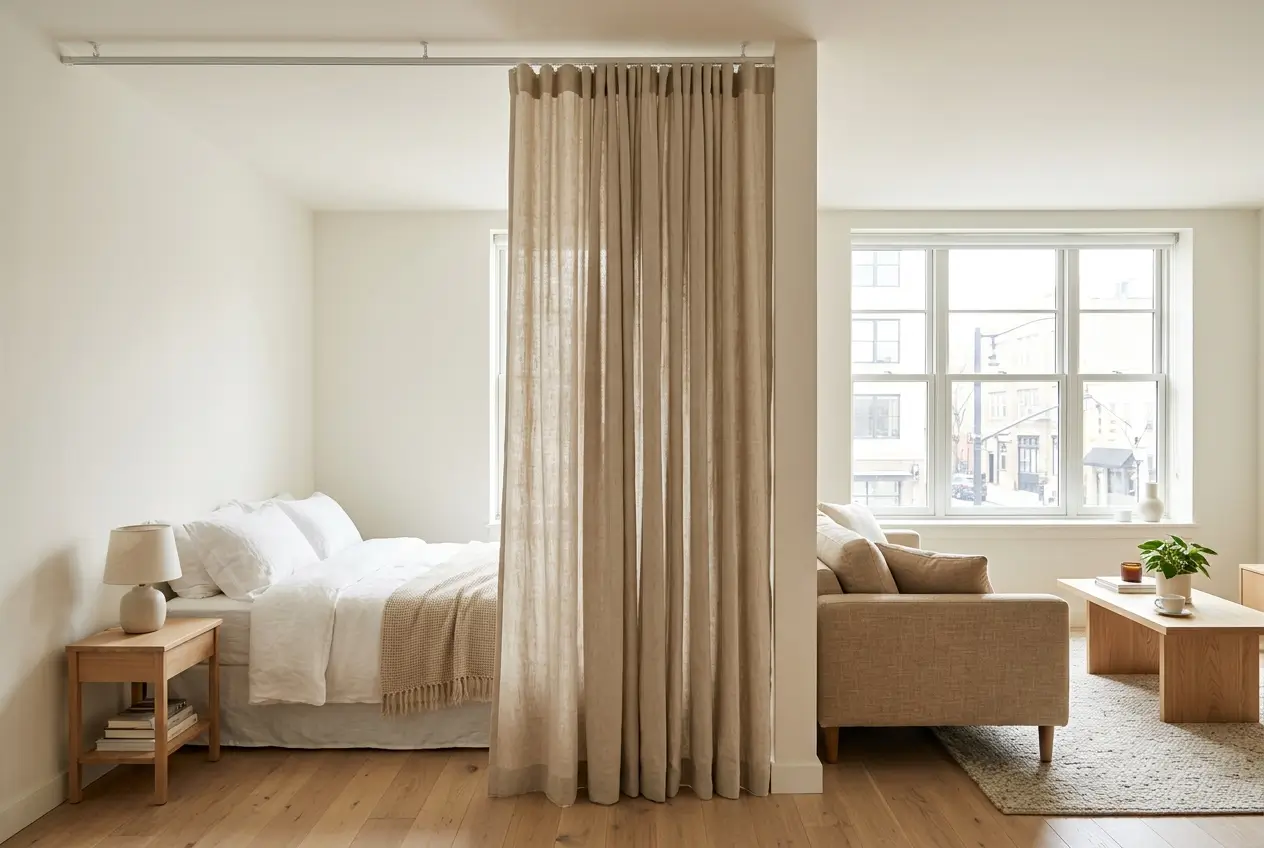
A studio apartment’s biggest design problem isn’t decor, it’s zoning — separating “bedroom” from “everything else” without a wall. A ceiling-mounted curtain track, hung from heavy-duty command hooks instead of drilled into the ceiling, creates that soft division without a single hole. Pick a curtain in a color already in the room rather than a bold contrast; matching it to the existing palette is what makes it read as a design decision instead of a dorm-room fix.
Tip: Check the weight rating on the hooks before hanging — a track loaded with heavy blackout fabric needs more than the standard-strength hooks most drawers already have in them.
Frequently Asked Questions
What’s the cheapest way to make a small apartment look expensive?
Layered lighting and one strong focal point — an oversized mirror or a gallery wall — usually deliver the biggest visible change for the least money. Both work by changing how light and attention move through the room rather than by adding more furniture, which is why they read as more expensive than their actual cost.
Will renters lose a security deposit doing any of this?
Most of the ideas here are built around that exact concern. Removable contact paper, peel-and-stick wallpaper, tension rods, and command-hook installations are all designed to come off clean. The one to double-check against a lease is a floating shelf kit, since some brackets do use small screws — read the install instructions before buying if the lease is strict about wall holes.
How many of these should I start with?
Two or three that touch different senses — one lighting change, one texture change, one focal point — will visibly shift a room faster than five ideas from the same category. Doing all thirteen at once tends to blur together instead of reading as thirteen deliberate choices.
Do these ideas hold up in a studio apartment specifically?
Studios lean harder on a handful of these than a one-bedroom would — the curtain divider and the layered lighting in particular, since both are solving the studio’s core problem of one room doing several jobs at once.
How much should the whole list actually cost?
It depends almost entirely on how much thrifting turns up, but a full refresh across all thirteen ideas is realistic well under a few hundred dollars. If the budget is tighter than that, start with lighting and the mirror — they’re the least expensive items on the list and the most visible. For the rest of the household budget, the same approach to spending when money is tight and a habit of checking for discounts before buying anything at full price stretch the decorating budget the same way they stretch everything else.
Start Small, Then Keep Going
None of these thirteen ideas require a renovation budget or a landlord’s permission — the layered lamps, the leaning mirror, and the thrifted gallery wall alone can change how a room feels in a single weekend. Start with whichever one solves the room’s biggest complaint first, then layer in the rest as budget allows. For more ways to make one room work harder without spending more, this living room decor roundup is a natural next stop.